


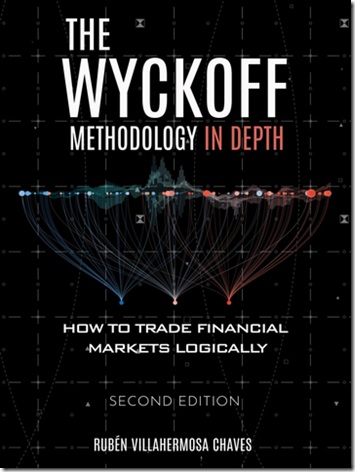
Ruben Villahermosa – The Wyckoff Methodology in Depth
$3.90
Ruben Villahermosa Unlocks the Secrets of the Wyckoff Methodology in Depth – Mastering Institutional Market Dynamics
In the world of advanced trading strategies, Ruben Villahermosa has emerged as a prominent figure, renowned for his deep understanding and effective application of the Wyckoff Methodology. His insights offer traders a way to decode complex market behaviors by focusing on the footprints left by institutional investors—the so-called “smart money.” The approach is particularly appealing because it moves beyond superficial analysis, instead emphasizing the identification of institutional influence through price and volume patterns. For traders eager to elevate their craft, studying Villahermosa’s teachings provides invaluable guidance on aligning their trades with the wyckoff cycle—a rhythmic pattern of accumulation, markup, distribution, and markdown—and gaining a comprehensive grasp of how wyckoff accumulation signals potential market turns.
By integrating principles from Ruben Villahermosa’s approach, traders can systematically decipher the underlying forces shaping market movements. This article delves into the wyckoff methodology in depth, unwrapping its core concepts, structures, and phases, while highlighting the essential tools for successful implementation. Whether you’re trading stocks, forex, cryptocurrencies, or futures, the insights shared here aim to demystify institutional manipulation—an understanding central to trading with the smart money rather than against it. Ultimately, Villahermosa’s perspective empowers traders to adopt a more disciplined, logical, and objective stance, minimizing guesswork and maximizing the probability of profitable trades.
Introduction to the Wyckoff Methodology
The Wyckoff Methodology is a sophisticated analytical framework that emphasizes the study of institutional footprints on price and volume charts. Unlike traditional technical analysis, which often relies on lagging indicators like moving averages or oscillators, Wyckoff’s approach seeks to understand the very process behind market moves—how large players accumulate positions quietly, test the market, and eventually push prices in their favor. This paradigm shift from reactive to proactive trading allows practitioners to anticipate market turns indeed before the majority of retail traders recognize them, thus significantly improving risk-reward profiles.
What makes the Wyckoff methodology truly compelling is its focus on market structure, events, and phases, which act as guides that help traders interpret possible future developments. It recognizes that the markets are driven by a cycle—the wyckoff cycle—comprising distinct phases that repeat over and over. This cyclical approach gives traders a logical framework, grounded in market physics, rather than relying solely on subjective guesses or emotional responses. Understanding the influence of institutional traders, including hedge funds and banks, is crucial because their actions set the tone and trend of the markets, making the Wyckoff Methodology an invaluable tool for those aiming for professional-grade analysis.
Foundations of the Wyckoff Philosophy
At its core, Ruben Villahermosa emphasizes that markets are not random chaos but are orchestrated by the most significant players—large institutional investors—whose movements are both measurable and predictable when approached correctly. This fundamental idea dispels the misconception that markets are uncertain or driven by unpredictable news events. Instead, it invites traders to see the market as a reflection of institutional influence, with their buying and selling activity leaving identifiable footprints on price and volume charts. Recognizing these footprints can reveal what the “Composite Man”—the metaphor for institutional activity—plans to do next.

This focus on institutions further aligns with Villahermosa’s practical philosophy: the goal is not to chase retail trends but to understand and follow smart money. By interpreting the subtle cues—such as volume surges during accumulation or distribution phases—traders can position themselves ahead of big moves, thus turning institutional footprints into actionable signals. The challenge lies in deciphering these footprints amidst noise; however, with disciplined analysis and a proper understanding of the wyckoff cycle, traders can reliably identify when market phases transition, improving overall success rates significantly.
The Three Fundamental Laws of Wyckoff
The Wyckoff Methodology is anchored by three fundamental laws that serve as cornerstones for market analysis.
The first law, Supply and Demand, states that price movement results from the imbalance between buyers and sellers. When demand exceeds supply, prices tend to rise; conversely, excess supply pushes prices lower. What sets Wyckoff apart is the focus on the underlying volume dynamics accompanying price changes, revealing whether the move is supported by institutional participation or retail speculation.
The second law, Cause and Effect, emphasizes that significant price moves are the effect of prior accumulation or distribution phases—essentially, the cause. This principle underscores the importance of identifying these structures since they set the stage for expected upward or downward expeditions, helping traders time entries, exits, and risk management strategies more accurately.
The third law, Effort vs. Result, examines the relationship between volume (effort) and price changes (result). Divergences—such as high effort with little price movement—may signal impending reversals or trend exhaustion. Conversely, minimal effort during significant moves can imply energy build-up for a break or reversal. Villahermosa encourages traders to analyze these dynamics meticulously, as they often reveal the true strength or weakness behind market moves.
Market Structures: Accumulation and Distribution Phases
Understanding market structures is vital for successful application of the Wyckoff Methodology. Accumulation phases occur when smart money quietly buys into an asset during sideways or consolidating markets, often below resistance levels. During this period, volume may seem irregular or subdued, but subtle signals—such as spring events—can indicate that institutions are testing supply at key support zones. Recognizing these signs allows traders to prepare for the subsequent markup phase, when prices rally as demand overtakes supply.
Similarly, distribution phases unfold when large players unwind their positions, often at or near the top of a rally. These phases are marked by specific structural behaviors, such as upthrusts—fake breakouts above resistance that trap retail bulls—indicating supply is entering the market. Identifying wyckoff accumulation and distribution structures grants traders the ability to forecast potential reversals or trend continuation, ultimately sharpening trade timing and improving profitability.
Key Events in Wyckoff Theory: Springs and Upthrusts
Within the framework of the Wyckoff Methodology, certain key events serve as pivotal signs of institutional activity. Two notable phenomena are springs and upthrusts.
A spring occurs when the price temporarily dips below support levels during accumulation, usually trapping retail traders on the short side. These moves are often quick and reversed, serving as tests of supply and indication of demand absorption at lower prices. Recognizing a spring helps traders anticipate an impending upward move, especially when volume confirms institutional accumulation. The spring acts as a powerful signal that a trend reversal or rally might be imminent, making it an ideal entry point for long positions.
Conversely, upthrusts are false breakouts above resistance during distribution phases. They trap retail bulls and denote that supply is still being absorbed by institutional traders behind the scenes. An upthrust generally signals a potential reversal to the downside, allowing contrarian traders to position short or tighten existing stop-losses. Both signs—springs and upthrusts—are critical tools to confirm phase transitions, differentiate between trap moves and genuine breakouts, and refine entry points aligned with smart money activity.
Analyzing Market Phases and Cycles
The Wyckoff cycle is comprised of five distinct phases that, when properly identified, help traders synchronize their strategies with the underlying institutional rhythm. These phases are: Accumulation, Markup, Distribution, Markdown, and Re-accumulation.
During accumulation, smart money quietly builds positions, and prices tend to move sideways as demand slowly outweighs supply. The markup phase follows, characterized by a decisive price rally driven by increasing institutional interest. As the cycle progresses, distribution sets in—a phase of top formation where large players offload holdings, often accompanied by upthrusts and testing events. The markdown ensues as prices decline with the realization of excess supply, culminating in re-accumulation—a new phase where institutions prepare for the next rally. Recognizing these phases through chart patterns and volume analysis enables traders to time trades effectively and manage risk intelligently.
Advanced Analytical Tools in Wyckoff Methodology
To deepen the analysis, practitioners leverage sophisticated tools like Volume Spread Analysis (VSA), which examines the relationship between price spreads and volume to assess the strength or weakness of market moves. For instance, a wide spread high-volume bar may indicate institutional involvement and climax points, while narrow spreads on high volume can suggest supply exhaustion or demand absorption.
Complementing VSA is contextual analysis—understanding broader market sentiment and macroeconomic factors—ensuring that technical signals are validated within the larger market environment. Villahermosa advocates for a holistic approach, incorporating multiple signals to avoid false positives and increase conviction. Effective combination of these tools leads to higher probability trades aligned with institutional footprints, allowing traders to act with confidence rather than guesswork.
Practical Application and Trading Strategies
Implementation of the Wyckoff Methodology hinges on identifying high-probability trade zones, areas where price and volume confluence suggests a likely move. During phases of accumulation or distribution, traders look for specific signals like springs, upthrusts, or structural breakouts, managing their positions with precise entry, stop-loss, and profit targets based on these formations.
Strategically, traders structure their positions around these signals, establishing clear scenarios—such as buying on signs of spring confirmation or shorting after upthrusts—while applying rigorous risk management techniques. Proper position sizing and stop-loss placement—often below support during accumulation or above resistance during distribution—are critical for reducing downside risk. The goal is to trade in harmony with the wyckoff cycle, capitalizing on confirmed institutional moves while avoiding premature entries or exits driven by retail noise.
Modern Adaptations and Technological Enhancements
In recent years, the Wyckoff Methodology has been transformed by technology, making advanced concepts like VSA more accessible to everyday traders. Simplification of these principles enables their practical use across diverse markets such as cryptocurrencies, forex, stocks, and futures. Automated tools, real-time data feeds, and charting platforms allow traders to quickly identify structure, volume signatures, and phase transitions, which traditionally required significant manual analysis.
Moreover, algorithms and AI-driven analysis now assist in detecting wyckoff accumulation and distribution patterns with higher precision, reducing subjective bias. Villahermosa’s adaptations emphasize that traders should leverage these technological aids to refine their market footprint reading—always aligning their strategies with the underlying institutional cycle rather than superficial indicators. This synergy between classic Wyckoff principles and modern tech pushes traders toward a more disciplined, professional approach that suits the fast-paced, liquid markets of today.
Conclusion
The Wyckoff Methodology, as elucidated by Ruben Villahermosa and rooted deeply in understanding institutional influence, offers a powerful framework for navigating financial markets objectively. Moving beyond lagging indicators, the methodology centers on rigorous analysis of market structures, events, and the wyckoff cycle, enabling traders to identify institutional footprints—wyckoff accumulation and distribution—with clarity. By adhering to the three fundamental laws, analyzing phase transitions like springs and upthrusts, and leveraging advanced tools such as VSA, traders can align their strategies with the smart money, substantially improving their success rate. Emphasizing discipline, structure, and real-world application, the Wyckoff Methodology equips serious traders with a professional edge, fostering consistent profits in today’s competitive markets and ensuring they trade in harmony with the true drivers of price action.
Sales Page: _https://www.amazon.com/Wyckoff-Methodology-Depth-Rub%C3%A9n-Villahermosa/dp/1703876121
Ruben Villahermosa Unlocks the Secrets of the Wyckoff Methodology in Depth – Mastering Institutional Market Dynamics
In the world of advanced trading strategies, Ruben Villahermosa has emerged as a prominent figure, renowned for his deep understanding and effective application of the Wyckoff Methodology. His insights offer traders a way to decode complex market behaviors by focusing on the footprints left by institutional investors—the so-called “smart money.” The approach is particularly appealing because it moves beyond superficial analysis, instead emphasizing the identification of institutional influence through price and volume patterns. For traders eager to elevate their craft, studying Villahermosa’s teachings provides invaluable guidance on aligning their trades with the wyckoff cycle—a rhythmic pattern of accumulation, markup, distribution, and markdown—and gaining a comprehensive grasp of how wyckoff accumulation signals potential market turns.
By integrating principles from Ruben Villahermosa’s approach, traders can systematically decipher the underlying forces shaping market movements. This article delves into the wyckoff methodology in depth, unwrapping its core concepts, structures, and phases, while highlighting the essential tools for successful implementation. Whether you’re trading stocks, forex, cryptocurrencies, or futures, the insights shared here aim to demystify institutional manipulation—an understanding central to trading with the smart money rather than against it. Ultimately, Villahermosa’s perspective empowers traders to adopt a more disciplined, logical, and objective stance, minimizing guesswork and maximizing the probability of profitable trades.
Table of Contents
Introduction to the Wyckoff Methodology
The Wyckoff Methodology is a sophisticated analytical framework that emphasizes the study of institutional footprints on price and volume charts. Unlike traditional technical analysis, which often relies on lagging indicators like moving averages or oscillators, Wyckoff’s approach seeks to understand the very process behind market moves—how large players accumulate positions quietly, test the market, and eventually push prices in their favor. This paradigm shift from reactive to proactive trading allows practitioners to anticipate market turns indeed before the majority of retail traders recognize them, thus significantly improving risk-reward profiles.
What makes the Wyckoff methodology truly compelling is its focus on market structure, events, and phases, which act as guides that help traders interpret possible future developments. It recognizes that the markets are driven by a cycle—the wyckoff cycle—comprising distinct phases that repeat over and over. This cyclical approach gives traders a logical framework, grounded in market physics, rather than relying solely on subjective guesses or emotional responses. Understanding the influence of institutional traders, including hedge funds and banks, is crucial because their actions set the tone and trend of the markets, making the Wyckoff Methodology an invaluable tool for those aiming for professional-grade analysis.
Foundations of the Wyckoff Philosophy
At its core, Ruben Villahermosa emphasizes that markets are not random chaos but are orchestrated by the most significant players—large institutional investors—whose movements are both measurable and predictable when approached correctly. This fundamental idea dispels the misconception that markets are uncertain or driven by unpredictable news events. Instead, it invites traders to see the market as a reflection of institutional influence, with their buying and selling activity leaving identifiable footprints on price and volume charts. Recognizing these footprints can reveal what the “Composite Man”—the metaphor for institutional activity—plans to do next.
This focus on institutions further aligns with Villahermosa’s practical philosophy: the goal is not to chase retail trends but to understand and follow smart money. By interpreting the subtle cues—such as volume surges during accumulation or distribution phases—traders can position themselves ahead of big moves, thus turning institutional footprints into actionable signals. The challenge lies in deciphering these footprints amidst noise; however, with disciplined analysis and a proper understanding of the wyckoff cycle, traders can reliably identify when market phases transition, improving overall success rates significantly.
The Three Fundamental Laws of Wyckoff
The Wyckoff Methodology is anchored by three fundamental laws that serve as cornerstones for market analysis.
The first law, Supply and Demand, states that price movement results from the imbalance between buyers and sellers. When demand exceeds supply, prices tend to rise; conversely, excess supply pushes prices lower. What sets Wyckoff apart is the focus on the underlying volume dynamics accompanying price changes, revealing whether the move is supported by institutional participation or retail speculation.
The second law, Cause and Effect, emphasizes that significant price moves are the effect of prior accumulation or distribution phases—essentially, the cause. This principle underscores the importance of identifying these structures since they set the stage for expected upward or downward expeditions, helping traders time entries, exits, and risk management strategies more accurately.
The third law, Effort vs. Result, examines the relationship between volume (effort) and price changes (result). Divergences—such as high effort with little price movement—may signal impending reversals or trend exhaustion. Conversely, minimal effort during significant moves can imply energy build-up for a break or reversal. Villahermosa encourages traders to analyze these dynamics meticulously, as they often reveal the true strength or weakness behind market moves.
Market Structures: Accumulation and Distribution Phases
Understanding market structures is vital for successful application of the Wyckoff Methodology. Accumulation phases occur when smart money quietly buys into an asset during sideways or consolidating markets, often below resistance levels. During this period, volume may seem irregular or subdued, but subtle signals—such as spring events—can indicate that institutions are testing supply at key support zones. Recognizing these signs allows traders to prepare for the subsequent markup phase, when prices rally as demand overtakes supply.
Similarly, distribution phases unfold when large players unwind their positions, often at or near the top of a rally. These phases are marked by specific structural behaviors, such as upthrusts—fake breakouts above resistance that trap retail bulls—indicating supply is entering the market. Identifying wyckoff accumulation and distribution structures grants traders the ability to forecast potential reversals or trend continuation, ultimately sharpening trade timing and improving profitability.
Key Events in Wyckoff Theory: Springs and Upthrusts
Within the framework of the Wyckoff Methodology, certain key events serve as pivotal signs of institutional activity. Two notable phenomena are springs and upthrusts.
A spring occurs when the price temporarily dips below support levels during accumulation, usually trapping retail traders on the short side. These moves are often quick and reversed, serving as tests of supply and indication of demand absorption at lower prices. Recognizing a spring helps traders anticipate an impending upward move, especially when volume confirms institutional accumulation. The spring acts as a powerful signal that a trend reversal or rally might be imminent, making it an ideal entry point for long positions.
Conversely, upthrusts are false breakouts above resistance during distribution phases. They trap retail bulls and denote that supply is still being absorbed by institutional traders behind the scenes. An upthrust generally signals a potential reversal to the downside, allowing contrarian traders to position short or tighten existing stop-losses. Both signs—springs and upthrusts—are critical tools to confirm phase transitions, differentiate between trap moves and genuine breakouts, and refine entry points aligned with smart money activity.
Analyzing Market Phases and Cycles
The Wyckoff cycle is comprised of five distinct phases that, when properly identified, help traders synchronize their strategies with the underlying institutional rhythm. These phases are: Accumulation, Markup, Distribution, Markdown, and Re-accumulation.
During accumulation, smart money quietly builds positions, and prices tend to move sideways as demand slowly outweighs supply. The markup phase follows, characterized by a decisive price rally driven by increasing institutional interest. As the cycle progresses, distribution sets in—a phase of top formation where large players offload holdings, often accompanied by upthrusts and testing events. The markdown ensues as prices decline with the realization of excess supply, culminating in re-accumulation—a new phase where institutions prepare for the next rally. Recognizing these phases through chart patterns and volume analysis enables traders to time trades effectively and manage risk intelligently.
Advanced Analytical Tools in Wyckoff Methodology
To deepen the analysis, practitioners leverage sophisticated tools like Volume Spread Analysis (VSA), which examines the relationship between price spreads and volume to assess the strength or weakness of market moves. For instance, a wide spread high-volume bar may indicate institutional involvement and climax points, while narrow spreads on high volume can suggest supply exhaustion or demand absorption.
Complementing VSA is contextual analysis—understanding broader market sentiment and macroeconomic factors—ensuring that technical signals are validated within the larger market environment. Villahermosa advocates for a holistic approach, incorporating multiple signals to avoid false positives and increase conviction. Effective combination of these tools leads to higher probability trades aligned with institutional footprints, allowing traders to act with confidence rather than guesswork.
Practical Application and Trading Strategies
Implementation of the Wyckoff Methodology hinges on identifying high-probability trade zones, areas where price and volume confluence suggests a likely move. During phases of accumulation or distribution, traders look for specific signals like springs, upthrusts, or structural breakouts, managing their positions with precise entry, stop-loss, and profit targets based on these formations.
Strategically, traders structure their positions around these signals, establishing clear scenarios—such as buying on signs of spring confirmation or shorting after upthrusts—while applying rigorous risk management techniques. Proper position sizing and stop-loss placement—often below support during accumulation or above resistance during distribution—are critical for reducing downside risk. The goal is to trade in harmony with the wyckoff cycle, capitalizing on confirmed institutional moves while avoiding premature entries or exits driven by retail noise.
Modern Adaptations and Technological Enhancements
In recent years, the Wyckoff Methodology has been transformed by technology, making advanced concepts like VSA more accessible to everyday traders. Simplification of these principles enables their practical use across diverse markets such as cryptocurrencies, forex, stocks, and futures. Automated tools, real-time data feeds, and charting platforms allow traders to quickly identify structure, volume signatures, and phase transitions, which traditionally required significant manual analysis.
Moreover, algorithms and AI-driven analysis now assist in detecting wyckoff accumulation and distribution patterns with higher precision, reducing subjective bias. Villahermosa’s adaptations emphasize that traders should leverage these technological aids to refine their market footprint reading—always aligning their strategies with the underlying institutional cycle rather than superficial indicators. This synergy between classic Wyckoff principles and modern tech pushes traders toward a more disciplined, professional approach that suits the fast-paced, liquid markets of today.
Conclusion
The Wyckoff Methodology, as elucidated by Ruben Villahermosa and rooted deeply in understanding institutional influence, offers a powerful framework for navigating financial markets objectively. Moving beyond lagging indicators, the methodology centers on rigorous analysis of market structures, events, and the wyckoff cycle, enabling traders to identify institutional footprints—wyckoff accumulation and distribution—with clarity. By adhering to the three fundamental laws, analyzing phase transitions like springs and upthrusts, and leveraging advanced tools such as VSA, traders can align their strategies with the smart money, substantially improving their success rate. Emphasizing discipline, structure, and real-world application, the Wyckoff Methodology equips serious traders with a professional edge, fostering consistent profits in today’s competitive markets and ensuring they trade in harmony with the true drivers of price action.
Sales Page: _https://www.amazon.com/Wyckoff-Methodology-Depth-Rub%C3%A9n-Villahermosa/dp/1703876121
Be the first to review “Ruben Villahermosa – The Wyckoff Methodology in Depth”
Related products

Forex & Trading


Forex & Trading
Forex & Trading

Forex & Trading

Forex & Trading


Forex & Trading
Reviews
There are no reviews yet.